Claude Pager
Concept and use cases
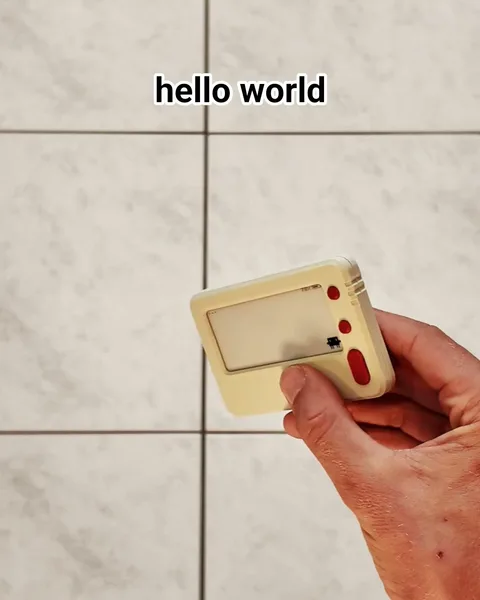
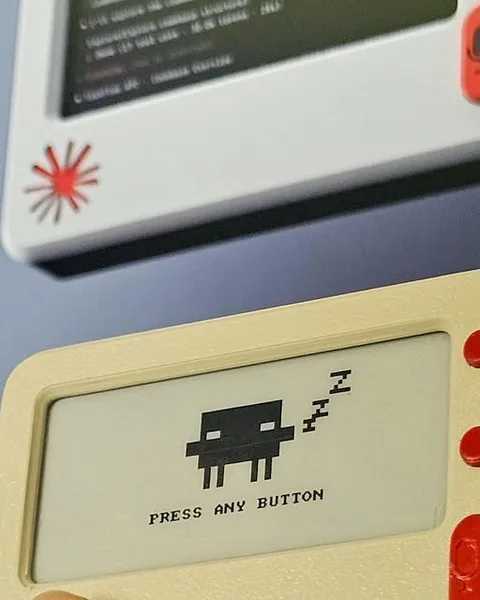
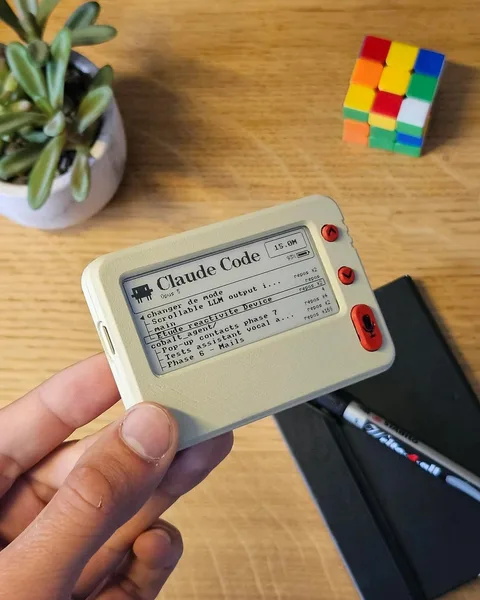
The Claude Pager is an e-ink AI prompter housed in the form factor of a 1990s beeper. Press the button, speak, release: the answer writes itself onto the e-paper. No backlight, no notifications, no feed to scroll — one gesture, one function.
Choosing the pager format isn't just a retro nod. A beeper clips to your belt, reads at a glance, and asks nothing of you when you're not using it. E-ink pulls in the same direction: it draws power only to change the image, and holds text on screen for months with the device switched off. For an object you query ten times a day for a few seconds at a time, it's the right technology.
The use case I'm aiming at: a remote control for Claude Code. Kick off a task, get the report back, answer the question the agent asks — from a dedicated object, without reopening the laptop or unlocking your phone.
Specs
- Heltec Vision Master E290 module, ESP32-S3 MCU
- 2.9-inch e-ink display — 296 × 128 px, partial refresh
- Single-button push-to-talk interaction
- Speech-to-text: Whisper, served by Groq
- Language model: Claude Haiku 4.5, via the Anthropic API
- Built-in Wi-Fi and BLE, SX1262 LoRa radio available on the module
- On-board LiPo battery and charge management — 18 µA in deep sleep
Progress
First version assembled and working. The Heltec E290 module turned out to be remarkably straightforward: the display, the radio and the battery management are already on the board, which leaves all the development time for firmware rather than electronics.
The chain runs end to end: audio captured on the button, transcription by Whisper via Groq, a response generated by Claude Haiku 4.5, rendered on the e-paper. The Claude Pager is today a self-contained push-to-talk chat device that depends on no phone.
Planned features
Next is turning it into a true Claude Code remote: starting a session from the pager, following the agent's progress on the e-ink screen, and answering its questions without going back to the keyboard.
The rest of the work is physical: a 3D-printed case faithful to the beeper format, a belt clip, and battery life pushed as far as it will go — which is exactly where e-paper and the ESP32-S3's 18 µA sleep current earn their place.